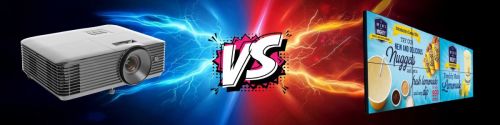
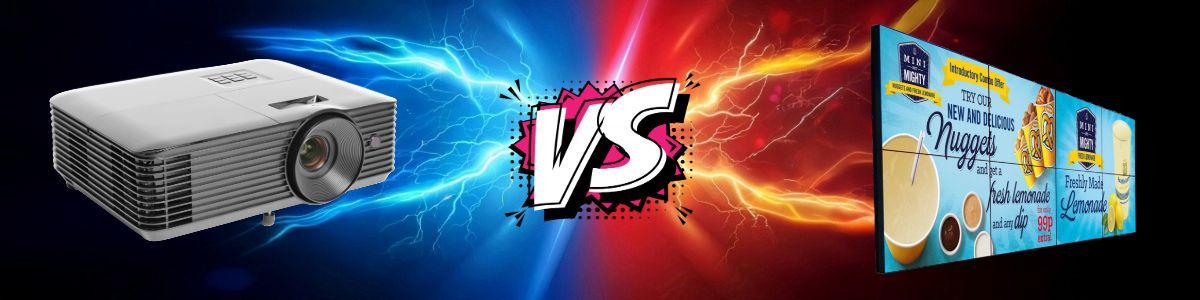
The declining cost of LED displays is transforming the landscape of large-scale display technology, enabling them to seriously compete with and, in many cases, outperform projectors. Once prohibitively expensive, LED walls are now entering a cost-performance zone that makes them viable for a wide range of commercial, retail, entertainment, and educational applications. This shift has broad implications for AV integrators, event planners, and even architecture and retail environments where large visual displays are crucial.
1. Cost Efficiency and Total Cost of Ownership
One of the most compelling reasons LED is gaining ground is the decreasing total cost of ownership (TCO). While the initial capital investment for an LED wall can still be higher than a projector, this gap has narrowed significantly in recent years. Manufacturing innovations, increased market competition, and improvements in LED chip technology have driven down prices. Meanwhile, projectors often require upkeep and have a shorter lifespan. LED walls, by contrast, boast a longer lifespan (often 100,000 hours) with virtually no ongoing maintenance, tipping the TCO balance in their favour.
2. Superior Visual Performance
LED walls offer unmatched visual quality, especially in challenging lighting conditions. Projectors struggle in environments with high ambient light, where their images can appear washed out. LED walls, being emissive rather than reflective, maintain high brightness levels (up to 6,000+ nits) and deep contrast ratios even in broad daylight or bright indoor spaces. Additionally, with higher pixel density, LED displays support 4K and even 8K resolutions over expansive surfaces without the pixelation or degradation common in projector setups.
This is particularly advantageous for events, digital signage, retail displays, and immersive environments where image clarity and vibrancy directly affect user engagement and brand perception.
3. Modularity and Scalability
LED walls are inherently modular. This allows users to construct displays of virtually any shape or size, adapting to architectural constraints or creative visions. Whether wrapping around a curved structure or building a freestanding video cube, LED panels can be custom-fit far more flexibly than projection surfaces and you dont have to worry about where you can mount the projectors either.
Conversely, projectors often require strict alignment and throw distance calculations, and become more complex when stitching multiple units for large displays (e.g., edge blending or warping). LED walls eliminate these headaches, supporting seamless tiling without bezels or brightness inconsistency.
4. Competitive Shift in Event and Commercial Installations
In large-scale venues such as stadiums, concert halls, trade shows, and even corporate lobbies, LED walls are replacing projection setups because of their impactful visuals, reliability, and long-term ROI. With cost barriers lowering, mid-size businesses and smaller institutions previously reliant on projection for budget reasons are also entering the LED market.
Notably, the need for fewer structural and lighting accommodations further reduces the installation and operational costs of LED systems, often making them the more economical choice even when factoring in higher upfront prices.
If you'd like a free, no-obligation quote, why not give our LED specialist team a call on 01256 885863 or leave us a message here.